
AI Automation Cuts Healthcare No-Shows by 60%
Healthcare, AI Automation, Patient Engagement
How AI Automation Helps Healthcare Clinics Reduce No-Shows by 60%
Missed appointments silently drain revenue, disrupt schedules, and limit access to care. By 2026, AI automation is enabling healthcare clinics worldwide to cut no-shows by up to 60–75%, while improving patient experience and easing front-desk workload. This article explains how decision-makers can turn no-shows from a chronic problem into a predictable, manageable process.
The Hidden Cost of No-Shows for Healthcare Clinics
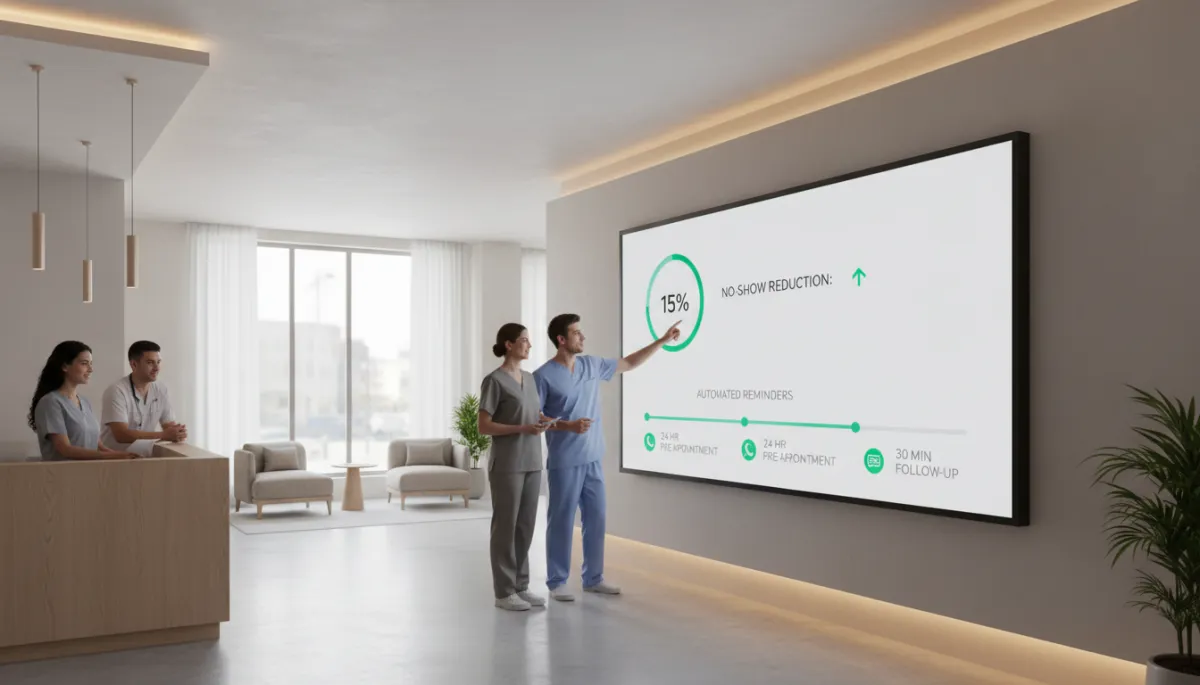
Across outpatient healthcare, average no-show rates hover around 15–30%, with a meta-analysis across 105 studies placing the overall average at roughly 23%. In specialties such as behavioral health and pediatrics, rates can be even higher. Each missed visit is more than an empty slot – it is lost revenue, wasted staff time, and a missed opportunity to deliver care.
In the United States alone, no-shows are estimated to cost the healthcare system about $150 billion annually, with each missed appointment representing around $200 in lost revenue. For a clinic with 2,200 appointments per month, reducing no-shows by just one-third can reclaim more than $30,000 per month in billable production. Many practices report recovering $5,000–$20,000+ per location each month when they seriously address no-shows using automation and AI.
The financial impact is only part of the story. Unfilled slots limit access for patients who genuinely need timely care, create frustrating gaps in providers’ schedules, and force staff into constant manual outreach and rescheduling. For owners and CEOs, this is a classic operational inefficiency: predictable, measurable, and solvable with the right systems.
From Basic Reminders to AI Automation: What Has Changed?
Many clinics already use simple reminder systems – a single SMS or email sent 24 hours before a visit. These basic tools do help, often cutting no-shows by 20–30%. However, they rarely adapt to patient behavior, and they still rely heavily on staff to manage replies, cancellations, and rescheduling.
AI automation goes several steps further. Modern AI scheduling and appointment automation platforms combine:
- Multi-channel reminders (SMS, WhatsApp, email, voice) at optimized intervals, such as 72 hours, 24 hours, and 2 hours before the visit.
- Two-way conversational AI so patients can confirm, cancel, or reschedule in seconds, without calling the clinic.
- Predictive risk scoring that identifies which appointments are most likely to no-show, enabling targeted outreach or overbooking strategies.
- Smart waitlist backfill that automatically offers newly opened slots to patients who want earlier appointments.
When these layers are combined, clinics see no-show reductions of 60–75% compared with baseline. Even single-channel automation (for example, text reminders only) can deliver roughly a 50% reduction in missed visits, according to recent 2026 case reports.
How AI-Powered Appointment Reminders and Follow-Ups Work
At a high level, AI appointment automation sits between your practice management system or EHR and your patients. It continuously reads your schedule, identifies upcoming appointments, and orchestrates the right communication at the right time and through the right channel.
1. Intelligent Timing and Channel Selection
Instead of sending the same message to every patient, AI learns from attendance history, response patterns, and demographics. It can, for example, discover that a specific patient consistently responds to WhatsApp in the evening but ignores morning emails. The system then adjusts automatically, using that channel and time window for future reminders – without any manual configuration by staff.
2. Two-Way Conversations, Not One-Way Alerts
AI-powered reminders invite patients to reply, not just read. A WhatsApp or SMS message might say: “Reply 1 to confirm, 2 to reschedule, or 3 if you cannot attend.” A conversational AI bot then handles the interaction, offering new time slots, answering basic questions (parking, preparation, telehealth links), and updating your schedule in real time. Clinics using conversational AI report no-show reductions in the 25–40% range, as well as a 37% drop in same-day cancellations.
3. Predictive Risk Scoring and Proactive Outreach
AI scheduling models analyze factors such as past attendance, time since booking, appointment type, time of day, and day of week to estimate the likelihood of a no-show. High-risk appointments can then receive extra attention: additional reminders, a personal call from staff, or earlier waitlist offers. This targeted approach is far more efficient than asking your front desk to “call everyone” the day before clinic.
4. Frictionless Rescheduling and Waitlist Backfill
One of the most powerful aspects of appointment automation is turning cancellations into rescheduled visits instead of lost revenue. When patients can reschedule with a single tap directly inside a reminder message, between 40–60% of cancellations convert into new bookings. At the same time, AI can automatically offer newly opened slots to patients on a digital waitlist, recovering 60–75% of cancelled slots without staff intervention.
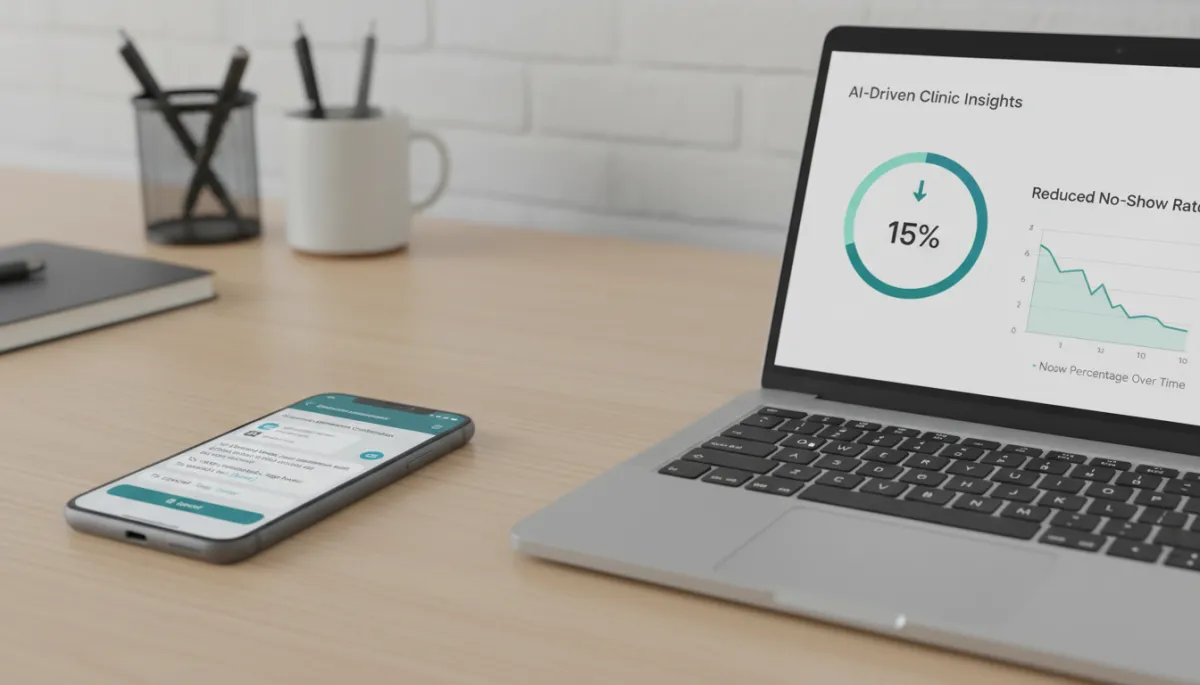
Two-way WhatsApp and SMS automation turns reminders into real-time schedule optimization.
Real-World Results: From 35% No-Shows to Predictable Schedules
Clinics across regions and specialties are already seeing measurable gains from AI automation. One outpatient clinic reported reducing its no-show rate from 35% to 12% in just 30 days by implementing automated WhatsApp and email reminders – a ~40% drop without hiring additional staff. Similar implementations commonly report overall reductions of 15–40%, with best-in-class multi-channel approaches achieving 60–75% fewer no-shows compared with the original baseline.
Financially, the return on investment is compelling. Studies and case reports from 2026 show:
- 4–5× net ROI on AI communication and appointment automation platforms.
- Payback periods of 10–18 months, with some clinics seeing full payback in as little as 3–6 months.
- Monthly revenue recovery of $5,000–$20,000+ per location, depending on volume and specialty.
Beyond revenue, leaders report softer but equally important benefits: calmer front desks, fewer last-minute schedule changes, better provider satisfaction, and improved patient loyalty due to consistent, helpful communication.
WhatsApp and SMS Automation: Practical Examples for Your Clinic
For many patients, WhatsApp and SMS are the most convenient and familiar channels. AI automation leverages these tools to create a seamless journey from booking to follow-up. Here are concrete examples of how this can look in everyday clinic operations.
Example 1: Multi-Step WhatsApp Reminder Flow
72 hours before the visit, the patient receives a WhatsApp message: “Hi Maria, this is CityCare Clinic. You have a consultation with Dr. Singh on Thursday at 3:30 PM. Reply 1 to confirm, 2 to reschedule, or 3 if you cannot attend.”
If Maria replies “2”, the AI bot instantly offers two or three alternative time slots pulled from your live schedule. When she selects one, the system updates the appointment, sends her a new confirmation, and releases the original slot back into your calendar, ready to be offered to another patient on the waitlist.
Example 2: SMS Follow-Up and Recall Automation
After the appointment, an automated SMS checks in: “Thank you for visiting Green Valley Clinic today. Reply 1 if you are feeling better, 2 if you still have concerns.” If the patient replies “2”, the system can propose a follow-up appointment or route the message to a nurse for review. For chronic disease management or preventive care, AI can schedule recall reminders months in advance and re-engage patients automatically when they are due.
Example 3: High-Risk No-Show Outreach
Suppose your AI scheduling system flags a block of Monday afternoon appointments as high-risk for no-shows based on past data. The platform can automatically send more assertive SMS or WhatsApp reminders, such as: “We have reserved a slot for you with Dr. Almeida at 4:00 PM. If you cannot attend, please tap here to reschedule so we can offer this time to another patient.” That subtle change in wording, combined with one-tap rescheduling, meaningfully reduces last-minute gaps in your schedule.
Implementing AI Scheduling and Appointment Automation Safely
For clinic leaders, the key questions are usually about risk, compliance, and change management – not just technology. Modern AI automation solutions are designed to integrate with your existing EHR or practice management system, respect regional privacy regulations, and keep staff firmly “in the loop.”
- Data security and privacy: Ensure your vendor supports HIPAA, GDPR, or other relevant frameworks, with encryption in transit and at rest, audit logs, and role-based access controls.
- Human oversight: Staff should be able to see and override AI-driven communications, especially for sensitive cases or VIP patients.
- Clear patient consent: Build mobile messaging consent into your intake forms and patient portal workflows to avoid compliance issues and improve engagement rates.
A phased rollout works best: begin with a subset of providers or locations, monitor your no-show metrics weekly, and refine your reminder timing and messaging. Within a few months, most clinics can confidently expand AI automation across the organization and standardize on a new, lower no-show baseline.
Conclusion: Turn No-Shows into a Solved Problem with AI Automation
For healthcare clinic owners and executives, persistent no-shows are not just an operational nuisance – they are a strategic threat to access, revenue, and patient outcomes. The good news is that by 2026, the playbook for solving this problem is clear. AI automation, combining multi-channel reminders, conversational messaging, predictive risk scoring, and frictionless rescheduling, is consistently delivering 60% or more reductions in no-shows for clinics that implement it thoughtfully.
Instead of overloading your front desk with manual calls and one-off texts, you can deploy AI scheduling and appointment automation that works 24/7 in the background – confirming visits, filling late cancellations, and guiding patients to the right time and channel for their care. The result is a more predictable schedule, higher provider productivity, better patient satisfaction, and a healthier bottom line for your organization.
If your clinic is still relying on basic reminders or manual outreach, now is the time to explore what AI automation can do for you. Whether you operate a single specialty practice or a multi-site network, the underlying opportunity is the same: transform no-shows from an expensive uncertainty into a manageable, data-driven process.
Meta Title: How AI Automation Helps Healthcare Clinics Reduce No-Shows by 60% | Nexurate Technologies
Meta Description: Discover how AI automation, WhatsApp and SMS reminders, and AI scheduling help healthcare clinics reduce no-shows by up to 60%, recover lost revenue, and improve patient experience. Learn practical strategies and real-world results for clinic owners and CEOs.
Author: Nexurate Technologies
