
67% of businesses using ai chatbots by 2026
AI, Customer Experience, Chatbots, SME Growth
Why 67% of Businesses Are Deploying AI Chatbots in 2026 — And How Yours Can Too
Nearly one billion people now interact with AI chatbots regularly, and by 2026, around 67% of growth-focused businesses report using them to handle customer conversations, qualify leads, and automate routine work. For SMEs, the question is no longer “Should we use an AI chatbot for business?” but “How do we deploy one that actually drives revenue and saves costs?”

What a Modern AI Chatbot Actually Does: The 3 Jobs It Replaces on Day One
Today’s conversational AI for SMEs goes far beyond simple scripted FAQs. Powered by large language models and connected to your business data, a modern AI chatbot for business can immediately take over three core roles that usually consume your team’s time.
1. Front-line customer support agent
IBM estimates that AI chatbots can reduce customer support costs by around 30%, largely by resolving high-volume, low-complexity queries before they ever reach a human agent. Think order tracking, booking changes, basic troubleshooting, store hours, or policy questions. Instead of your team spending hours replying to the same emails and chats, the bot handles them 24/7 with consistent accuracy and tone.
2. Always-on sales development rep (SDR)
Modern chatbots don’t just answer questions; they qualify leads. They can ask discovery questions, segment visitors by intent, capture contact details, and route hot leads directly to your sales team. Many SMEs report that conversational AI for SMEs on their website or landing pages increases the number of qualified leads entering the funnel, especially outside office hours when human SDRs are offline.
3. Digital concierge and website navigator
If your site has more than a handful of pages, customers often struggle to find what they need. An AI chatbot acts as a smart concierge: it understands natural language questions, surfaces the right product, service page, or article, and can even walk users through forms or booking flows step-by-step. Connected to a modern CMS such as Nexurate CMS , it can reference the latest content without manual re-training.
The ROI Numbers: Why Chatbots Deliver $8 for Every $1 Invested
The business case for customer service automation is now backed by solid data. A 2026 industry report finds that AI chatbots deliver an average return of $8 for every $1 invested in deployment and operations. For SMEs with tight margins, that kind of leverage is difficult to ignore.
Cost per interaction: $0.50 vs $6.00 for a human agent
According to Axis Intelligence, a typical chatbot interaction costs around $0.50, compared to approximately $6.00 when handled by a human agent. That is a 12:1 cost advantage per conversation. For a business handling 5,000 support interactions per month, shifting even half of those to a chatbot can save over $16,000 annually—while improving response times and availability.
Revenue impact: 67% sales increase and faster payback
When chatbots are configured for both support and sales, they do more than cut costs—they drive revenue. Across SMEs and mid-market firms, case studies show up to a 67% increase in sales from channels where chatbots proactively engage visitors, offer tailored recommendations, and recover abandoned carts or incomplete enquiries. Digital Applied’s 2026 data indicates a median payback period of just 4–6 months for customer-facing AI agents, especially in sales and marketing use cases.
Year-one ROI: 57% see significant gains
While ROI varies by implementation quality, research across sectors shows that around 57% of organizations achieve significant, measurable chatbot ROI within the first year. For SMEs, surveys such as the Davarion Group’s 2026 report suggest even faster returns, with many smaller deployments seeing 300–800% ROI in 30–90 days when bots are aligned to clear, high-volume use cases.
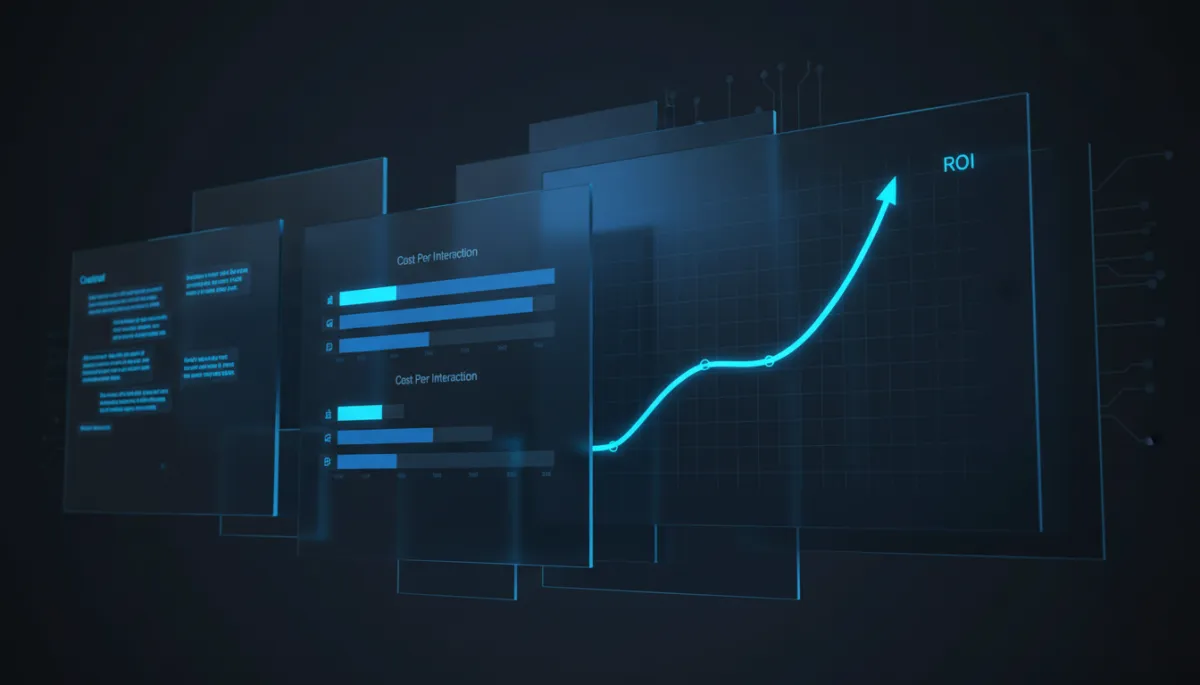
Shifting routine queries to chatbots can cut support costs by about thirty percent.
The 3 Biggest Chatbot Mistakes Businesses Make
Despite strong chatbot ROI potential, many pilots never reach production. Studies show that up to 88% of AI agent pilots stall before full rollout, often due to strategy and integration gaps rather than technology. Three mistakes appear again and again.
1. No clear use case or success metric
Many teams launch chatbots because “everyone else is doing it” without defining what the bot is supposed to achieve. Is the priority reducing ticket volume, capturing more leads, or increasing self-service resolution? Without a sharp use case and KPIs—such as first-contact resolution rate, leads captured per week, or cost per interaction—it is impossible to prove chatbot ROI or justify further investment.
2. No human handoff design
Over-automation is a common complaint in 2026 chatbot reviews. Users quickly become frustrated if they are trapped in loops with no way to reach a real person. A professional deployment includes a clear human handoff flow: when the bot detects frustration, complexity, or regulatory sensitivity, it escalates to a live agent with full conversation history so customers never need to repeat themselves.
3. Not connecting the chatbot to your CRM and core systems
A chatbot that cannot see customer history, open orders, or previous tickets is operating blind. Failing to integrate with your CRM and CMS means the bot can only give generic responses and cannot personalize offers or update records. Integration is where much of the long-term value emerges: every interaction becomes structured data you can use for segmentation, remarketing, and product decisions.
How to Choose the Right AI Chatbot for Your Business Size
The “best” AI chatbot for business depends on your scale, team capacity, and digital maturity. Here is a practical way to evaluate options by size.
Micro and small businesses (1–20 employees)
Priorities: simplicity, affordability, and fast setup. Look for:
- No-code configuration with clear templates for FAQs, bookings, and lead capture
- Easy website and WhatsApp or Facebook Messenger integration
- Simple analytics: conversations handled, leads captured, and basic satisfaction scores
At this level, a focused chatbot on your website, integrated with a lightweight CMS such as Nexurate CMS , can deliver quick wins without needing a dedicated IT team.
Growing SMEs (20–250 employees)
Priorities: multichannel support, CRM integration, and measurable chatbot ROI. Look for:
- Native integrations with your CRM, helpdesk, and marketing automation tools
- Role-based permissions so marketing, sales, and support can collaborate safely
- Advanced analytics: conversion tracking, deflection rates, and cohort analysis
For this segment, consider platforms that specialize in conversational AI for SMEs and offer guided onboarding. Solutions like Nexurate AI Chatbot are built to balance power with usability for exactly this audience.
Mid-market and multi-location businesses
Priorities: governance, scalability, and deep integration. You will need:
- Support for multiple brands, languages, and regions from a single platform
- Strong security, audit logs, and role-based workflows for approvals
- Flexible APIs and webhooks to connect to legacy systems, data warehouses, and custom apps
A 3-Step Launch Plan to Deploy Your AI Chatbot in 30 Days
Moving from idea to live chatbot does not need to be a six-month project. With a focused approach, most SMEs can launch a high-impact bot within 30 days.
Step 1: Define one high-impact use case and success metrics
Start narrow. Choose a single use case where the value is obvious, such as:
- Reducing repetitive support questions (shipping, returns, booking changes)
- Capturing and qualifying website leads for a specific service line
- Guiding visitors to the right product or pricing page
Define 2–3 metrics, such as “deflect 25% of tickets from live chat,” “capture 50 new leads per month,” or “increase on-site conversion by 10%.” This is how you will prove chatbot ROI internally.
Step 2: Connect content, CRM, and escalation paths
Next, connect your chatbot to the systems that matter:
- Your CMS, so it can answer questions based on up-to-date product and support content
- Your CRM, so it can recognize existing customers, log new leads, and trigger workflows
- Your live chat or helpdesk, so complex queries seamlessly escalate to humans
Map out escalation rules: which topics should always go to a human, what signals frustration, and what SLAs your team will meet once a conversation is handed off.
Step 3: Launch, monitor, and iterate weekly
Go live on a limited surface area first—your pricing page, help center, or one regional site. Monitor:
- Conversation volume and completion rates
- Escalation frequency and reasons for handoff
- Leads or sales influenced by chatbot interactions
Schedule a weekly 30-minute review with marketing, sales, and support to refine answers, add new intents, and adjust routing. In most SMEs, this light-touch governance is enough to move from pilot to proven channel within a quarter.
Turning Chatbot Adoption Into a Competitive Advantage
By mid-2026, conversational AI is no longer experimental. With the global chatbot market projected around $11 billion and almost a billion users engaging daily, your customers increasingly expect instant, conversational support from every brand they interact with—regardless of size.
For SME owners, CEOs, and marketing leaders, the opportunity is clear: deploy an AI chatbot for business that is tightly aligned with your goals, integrated into your CRM and CMS, and backed by a simple governance process. Done right, you can tap into the documented $8 per $1 invested returns, reduce support costs by double digits, and unlock up to 67% more sales in key digital channels.
If you are ready to explore what this could look like for your own site, you can learn more about dedicated SME solutions at nexurate.com/aichatbot and modern content foundations at nexurate.com/cms .
